

The short answer
Dynamic number insertion, or DNI, swaps the phone number shown on your website depending on how the visitor arrived. Each number forwards to your real phone, so every call can be traced back to the ad, keyword or search that produced it without changing anything for the caller.
What it is
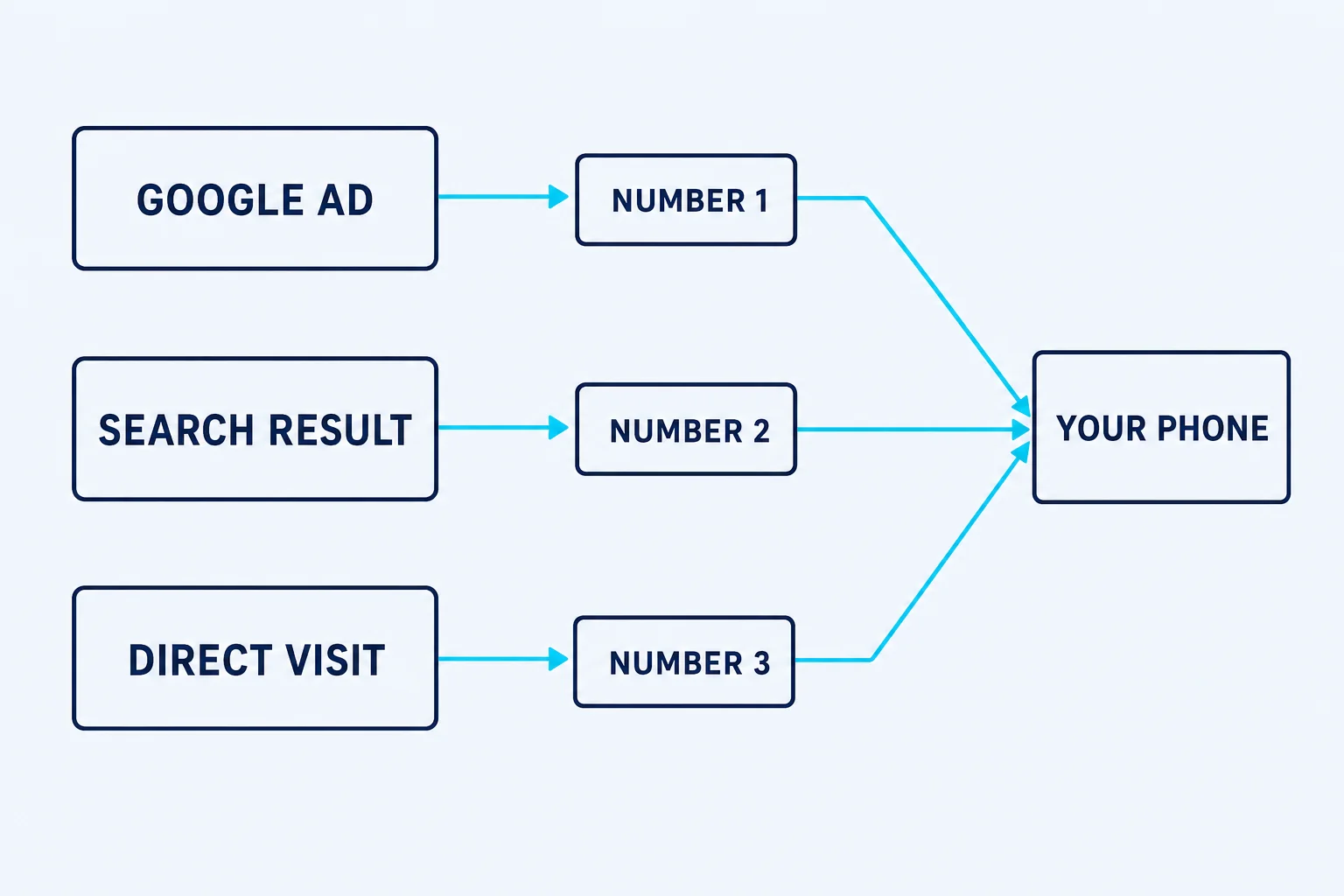
DNI swaps the phone number shown on your website depending on how the visitor arrived. Someone who came from a Google ad sees one tracking number, someone who arrived from a search result sees another, and both forward to your real phone.
Because each number is tied to a source, the call that comes in can be traced back to the campaign, the keyword and often the exact search that produced it. Nothing about the caller's experience changes; they tap a number and your phone rings.
Why it is important
Without it, phone leads are estimated. Form submissions get counted because they happen on the website, calls do not, so a campaign that produces mostly calls can look like it is producing almost nothing while the business is busier than it has been in months.
That gap does real damage, because automated bidding optimises toward whatever it can see. An account measuring forms and blind to calls will steadily shift budget toward the searches that produce forms, which for most trades are the lower-intent ones.
What it means for tradies
Get the call counted properly rather than just counted. A call that lasted eleven seconds is a wrong number, not a lead, and setting a minimum duration before it counts is what stops the reporting flattering itself.
One thing to check at setup: your Google Business Profile and your directory listings should keep showing your real number. Consistency of business details across the web matters for local search, and a tracking number leaking into those listings is the common way DNI is installed badly.
Dynamic number insertion, in one line
Swapping the phone number on the page per visitor so each call traces to its source.