

The short answer
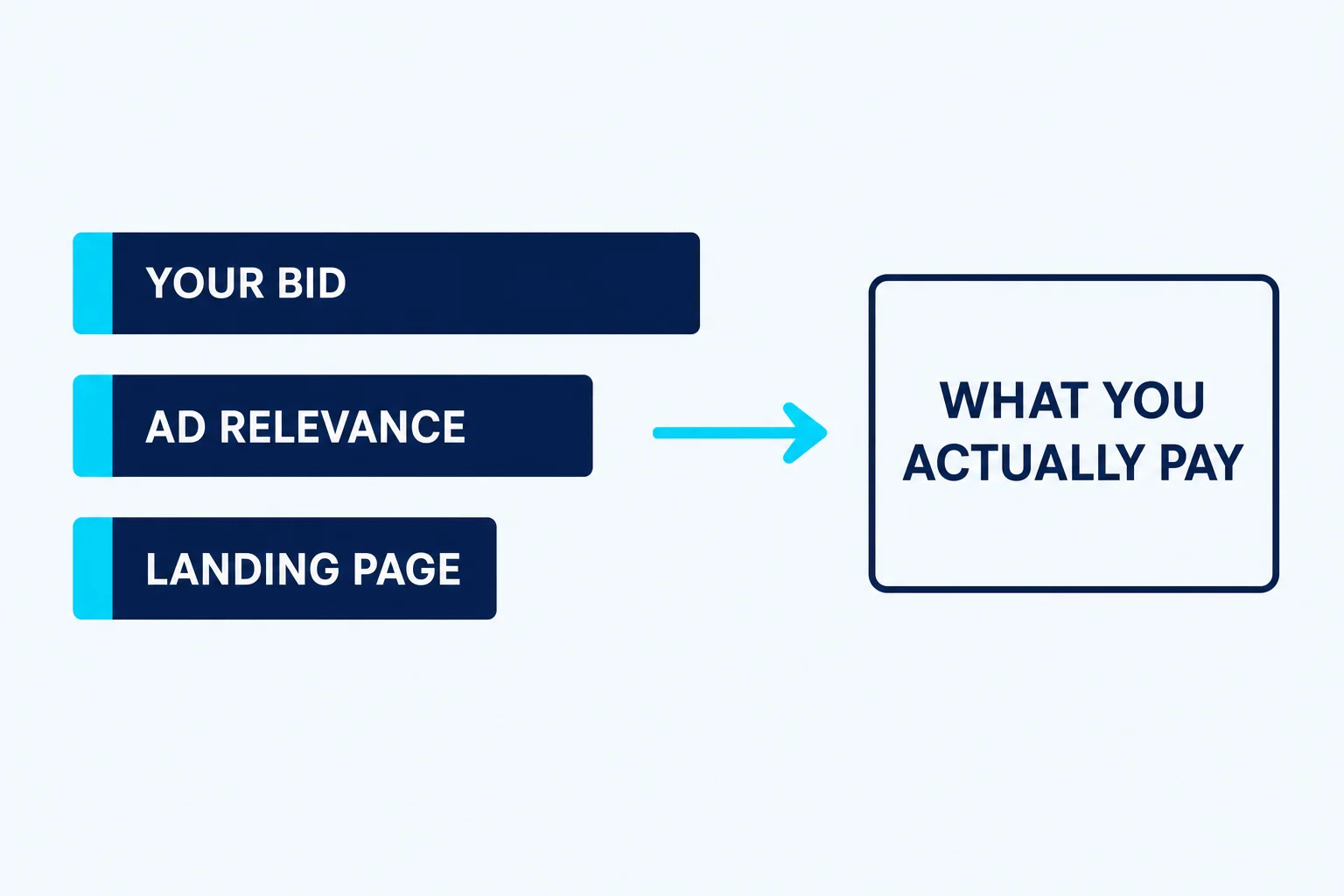
Cost per click, or CPC, is what you pay each time someone clicks your Google ad. You are charged for the click, never for the ad being shown. The amount is set by an auction that weighs your bid against how relevant your ad and landing page are to the search.
What it is
Cost per click is what you pay when someone clicks your ad. You are not charged for the ad being shown, only for the click, which is why impressions cost nothing and mean nothing.
What you pay is not what you bid. Your bid is a ceiling; the actual price is set in an auction that runs every time someone searches, and it takes account of how relevant your ad and landing page are as well as what you were willing to pay.
Why it is important
CPC is the price of the raw material, and it is the one lever that quietly changes everything downstream. Improve the relevance of the ad and the page it lands on and the same position can cost less, which means the same budget buys more chances at a job.
It is also the number that makes comparisons meaningless. An emergency search in a capital city and a planned-work search in a regional town are different auctions with different competitors, so a CPC figure quoted without the trade, the city and the search behind it is not information.
What it means for tradies
A low cost per click is not a win on its own. Cheap clicks are easy to buy by loosening your keywords, and the cheapest traffic in most trades is the traffic least likely to book anything: people researching, comparing, or looking for a job rather than a tradesperson.
The number to hold a campaign to is cost per lead, and eventually cost per booked job. A campaign paying more per click and less per booked job is the better campaign, and any report that leads with CPC while staying quiet about leads has chosen what to lead with.
Cost per click, in one line
What you pay when someone clicks your ad, abbreviated CPC.