

The short answer
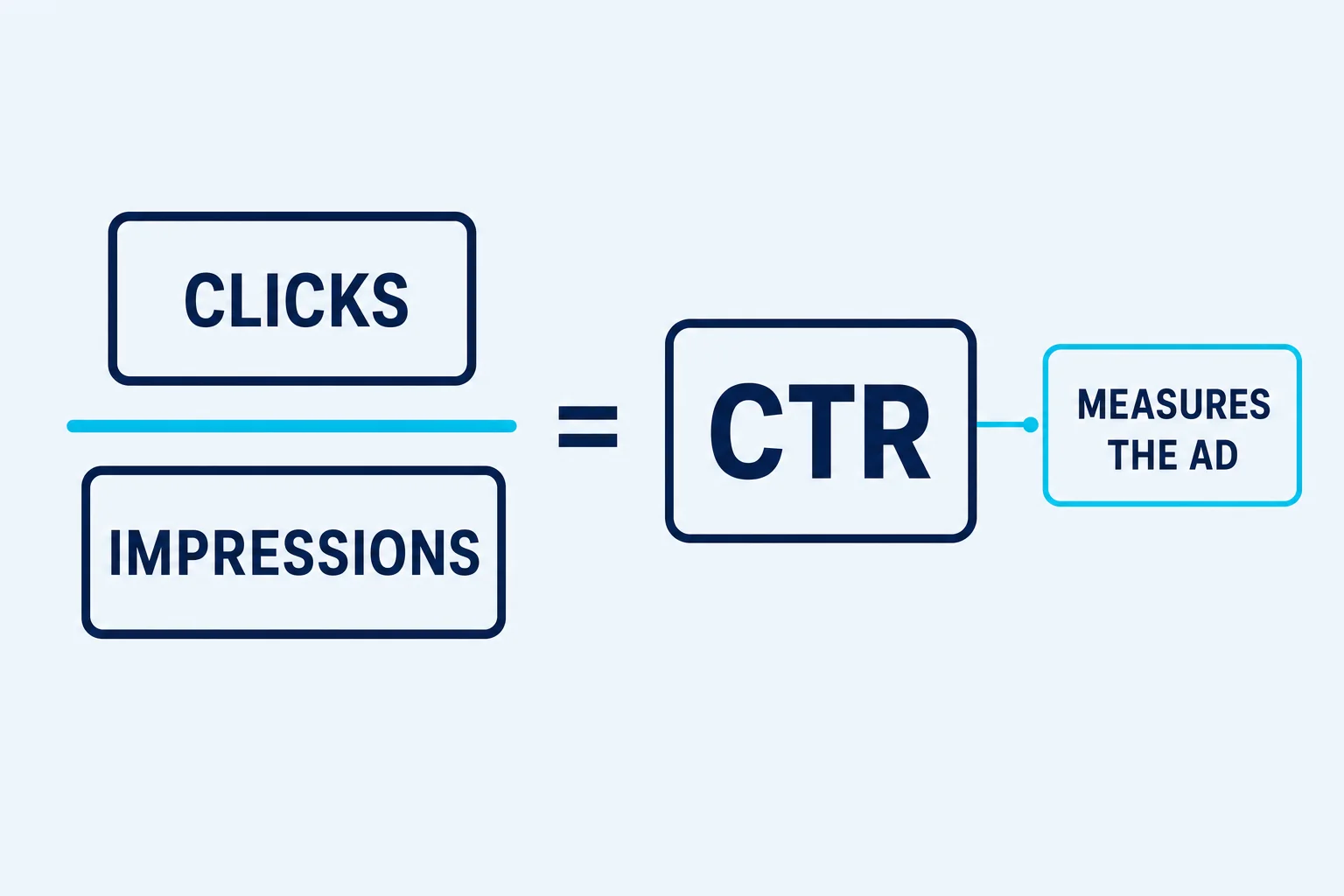
Click-through rate, or CTR, is the percentage of people who clicked your ad after seeing it. Divide clicks by impressions: five clicks from a hundred impressions is a five percent CTR. It measures how appealing the ad was, not whether the click was worth anything.
What it is
If your ad was shown a hundred times and five people clicked it, the click-through rate is five percent. That is the whole calculation.
It measures one thing: how appealing your ad was to the people who saw it. It says nothing about who those people were, what they wanted, or what happened after the click.
Why it is important
As an early signal it is genuinely useful. A very low rate usually means the ad does not match the search, and rewriting it to repeat the words the customer typed is often the cheapest improvement available on a campaign.
It also feeds into how Google ranks your ad, so a more relevant ad can hold its position for less money. That is a real saving, and it is the strongest argument for taking ad copy seriously rather than leaving the default in place.
What it means for tradies
A high click-through rate on the wrong search is an expensive kind of relevance. An ad that is compelling to people searching for apprenticeships, DIY guides or a cheaper quote will earn a fine CTR and fill your budget with clicks that were never going to book work.
Read it beside the search terms report and the cost per lead, never on its own. If the rate is climbing and the phone is not, the ad is doing its job and something after the click, usually the landing page or who the keywords are attracting, is not.
Click-through rate, in one line
Clicks divided by impressions, as a percentage. Abbreviated CTR.